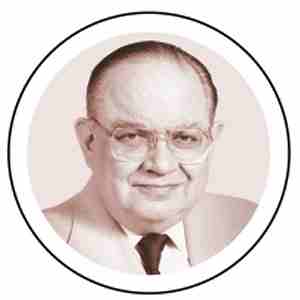
Felix T. Rapaport was an outstanding surgeon-scientist, humanitarian, husband and father, who was universally regarded as one of the international giants in the field organ transplantation. His extraordinary contributions proved to be major factors in the development of organ transplantation to its current global status. Besides his committed scientific work in the transplantation world he was an elected member of the Transplantation Society Council and the editor-in-chief of Transplantation Proceeding for 36 uninterrupted years.
Felix T. Rapaport was born in Munich, Germany on 27 September 1929. In 1936 Felix and his family were forced to move to Paris. When France fell during World War II, Rapaport family first moved to the Dominican Republic and later to the United States of America in 1945. Dr. Rapaport attended college and medical school at New York University and did his surgical residency in the New York University service at Bellevue Hospital.
At New York University, Felix also undertook a research fellowship under John Converse, who, as a mentor, had substantial influence on his scientific career. Felix's first surgical faculty position was at New York University, where he became Director of the Transplantation and Immunology Division. He moved to the State University of New York at Stony Brook in 1977, where he became Director of the Transplantation Service and the Histocompatibility and Immunogenetics Testing Laboratory. In 1995, Felix was named a Distinguished Professor of Surgery and Immunology at Stony Brook.
Felix received many honors and awards. Most important were the Medawar Prize, and the decorations by President Jacques Chirac of France as Commandeur de la Légion d'Honneur and by President Carlos Saul Menem of Argentina with the Orden de Mayo al Merito. Despite these distinguished awards, Felix always regarded his greatest honor to have had the privilege to interact with scientists and physicians of different cultures throughout the world. His fluency in 5 different languages served him well in this regard. He was truly the consummate international ambassador of organ transplantation.
Felix Rapaport's winning every election to every office of The Transplantation Society including its presidency shows the support and respect he received from every part of the world. Essentially every President relied on Felix Rapaport's wisdom and counsel during their terms of office.
Felix Rapaport's scientific contributions were monumental and included more than 500 articles in the medical literature. The magnitude of his contributions are best summarized by the following quotation from the citation delivered by Thomas Starzl, when Felix was awarded the prestigious 1998 Medawar Prize by The Transplantation Society:
"Between 1958 and 1962, Felix reported the first systematic study of skin allograft rejection in humans, which suggested the existence of tissue types in man. These studies and subsequent ones with Jean Dausset culminated in the definition of the dog (DLA) and human (HLA) luekocyte antigen systems, and defined the laws of transplantation in both species. When Dausset became co-recipient of the Nobel Prize in 1980 for the discovery of HLA, he remarked that equal credit should go to Rapaport."
Jean Dausset had previously also commented that he was very lucky to have met Felix, who was a true virtuoso at skin grafting. Working together, they performed hundreds of skin grafts on volunteers with striking overall results that laid the foundation of our current HLA system for organ transplantation.
Felix Rapaport had a most remarkable career with a tremendous and lasting impact on organ transplantation. But most of all, he touched and inspired the lives of many. He will be greatly missed, but also forever remembered with love and affectionate gratitude by his patients as well as by scientists and physicians working in the field of organ transplantation throughout the world.
|